
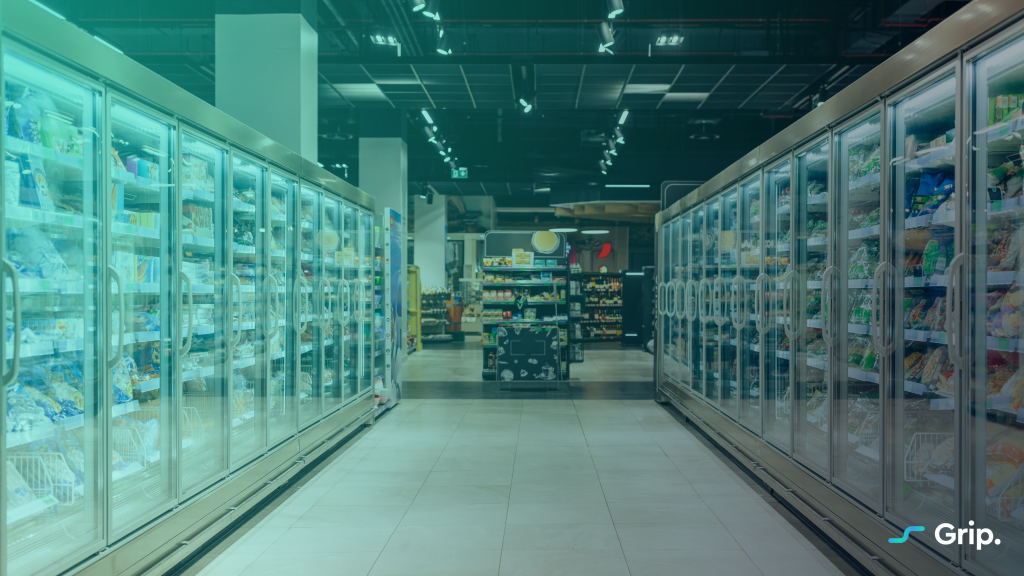
Frozen and refrigerated retail brands have spent decades building their businesses around grocery store distribution. Freezer placements, promotions, and regional partnerships have been the backbone of growth. But due to the past years of heavy online demand, DTC has become more than a side channel. The shift is driven by consumer behavior.
Shoppers are buying online, buying more frequently, and buying across more categories, including grocery. This past Thanksgiving-to-Cyber-Monday window made that clear: U.S. consumers spent over $44.2 billion online, and more than 202 million shoppers participated across channels.
Although retail is still incredibly important, DTC is able to offer something different: nationwide reach, direct customer visibility, and control over the brand experience from fulfillment to doorstep. The question for many retail brands heading into next year shouldn’t be whether DTC is worth exploring, it should be how to approach it thoughtfully.
Here’s what they need to understand.
DTC Offers Reach That Retail Alone Can’t Match
Traditional grocery distribution grows region by region, while DTC grows everywhere at once. When a brand moves into DTC, its products become instantly accessible to customers far outside the geography of its retail footprint. That reach unlocks two advantages: more potential revenue and more information about who your customers actually are.
Retail can tell a brand where a SKU sold well, but it can’t reveal much about the individual behind the purchase. DTC uncovers buying patterns in real time—how often customers reorder, which SKUs drive loyalty, where demand spikes, and where it stalls. This information becomes the foundation for product development, pricing strategy, and regional expansion decisions.
And unlike retail, where the shopper experience is filtered through a retailer’s environment, DTC allows brands to shape the entire interaction. From packaging to delivery expectations to repeat communications.
Moving Into DTC Requires Operational Readiness
This is where many retail teams hesitate. Frozen and refrigerated DTC is not a simple extension of retail. It is a different operating model with different constraints. Retail relies on cases and pallets moving through distribution centers. DTC relies on individual orders that must be picked, packed, refrigerated, insulated, and delivered quickly and reliably.
Brands that underestimate this shift often see costs rise faster than revenue. The difference between profitable DTC and operational strain comes down to three levers: packaging, fulfillment footprint, and shipping strategy. These levers must work together.
This is where the right operating partner makes the difference.
Packaging: Controlling Cost Without Compromising Quality
In DTC, packaging is a critical cost and performance lever. Retail packaging is rarely designed to survive individual parcel shipping, especially for refrigerated or frozen goods.
Grip works with brands to ensure packaging is optimized specifically for DTC, balancing insulation, refrigerant, and dimensional weight so products arrive safely without unnecessary cost. By pairing packaging strategy with real-time data, Grip helps brands reduce spoilage, control shipping costs, and maintain product quality across varying climates and transit times.
When packaging is designed for DTC from the start, brands avoid the cost inflation that often slows early momentum.
Fulfillment Footprint: Speed and Margin Are Built Together
Where inventory lives determines how fast it reaches customers and how much it costs to get there. Many brands initially rely on a single distribution point for simplicity, only to discover that long transit times weaken the customer experience and inflate shipping costs.
Grip’s fulfillment model is designed specifically to avoid that tradeoff. With six strategically located cold-chain facilities across the U.S., Grip places inventory closer to end customers, enabling faster delivery while reducing shipping distance and cost. This network supports 80% next-day coverage nationwide, allowing brands to meet rising delivery expectations without relying on expensive expedited shipping.
By designing fulfillment around DTC parcel delivery rather than pallet movement, Grip helps retail brands scale nationally without increasing operational complexity for internal teams.
Shipping Strategy: Reliability Requires Real-Time Optimization
Carrier performance is not static. It varies by region, season, and volume, and brands that rely on a single carrier often experience inconsistent delivery outcomes and unpredictable costs.
Grip addresses this variability through an extensive carrier mix that includes both national carriers and high-performing regional partners. Rather than forcing every order through one provider, Grip’s AI-powered logistics platform continuously evaluates carrier performance and automatically selects the most cost-efficient and reliable shipping option for each shipment.
This performance-driven approach improves on-time delivery, lowers cost per order, and protects the customer experience.
Speed Is Not Optional
In DTC, delivery speed directly impacts conversion and retention. Consumers increasingly expect delivery within two to three days, even for perishable products. Brands that miss these expectations often see higher customer service volume, weaker repeat purchase behavior, and lower lifetime value.
Grip’s distributed fulfillment network and dynamic carrier capabilities are designed to support fast delivery at scale. Speed in DTC doesn’t happen automatically. It’s engineered through infrastructure, data, and execution.
Data Becomes a Core Strategic Asset
Retail provides volume data. DTC provides behavioral data.
Through DTC, retail brands gain visibility into:
- repeat purchase behavior
- SKU-level performance by region
- packaging durability in real-world conditions
- churn drivers and reorder cadence
Grip’s proprietary platform brings this data together across fulfillment and logistics, turning DTC into a feedback loop that informs both eCommerce and retail strategy. Over time, this visibility reduces risk and improves decision-making across the business.
Building Direct Customer Relationships
One of the most overlooked advantages of DTC is ownership of the customer relationship. In retail, brands rarely know who bought their product, how often they reorder, or why they churn. That relationship belongs to the retailer, not the brand.
DTC changes that. When customers buy directly, brands gain visibility into behavior and begin a real, ongoing relationship. For retail products that fit naturally into weekly or monthly routines, that relationship is especially valuable.
The impact shows up quickly. Research indicates that even modest improvements in retention can drive 25% or more gains in profitability, as repeat customers spend more over time, engage more deeply with trusted brands, and create more predictable revenue.
For retail brands, this foundation unlocks something retail cannot: subscription models that actually stick. Subscriptions struggle in retail because there’s no direct relationship to support them. In DTC, consistent delivery and a reliable experience make automatic replenishment a natural extension of customer behavior (particularly for frozen foods, snacks, beverages, pantry staples, and pet food).
Direct relationships also enable:
- personalized reorder experiences
- smarter product recommendations
- flexible subscriptions based on real behavior
- higher lifetime value without heavy acquisition spend
In other words, subscriptions are not just a revenue model; they’re a relationship model.
The Bottom Line
DTC offers frozen and refrigerated grocery brands a meaningful opportunity: nationwide reach, richer customer insight, stronger brand control, and a direct relationship with customers. However, the channel is only effective when the operations behind it can support scale. For grocery brands considering DTC in the year ahead, the question isn’t “Should we do this?” The question is “Are we ready to do it well?”
With the right operational systems in place, DTC won’t just expand distribution. It will reshape a brand’s growth trajectory.
Ready to explore DTC as a growth channel? Reach out: partnerships@gripshipping.com